Certificate of Analysis (COA)
What Is a Certificate of Analysis?
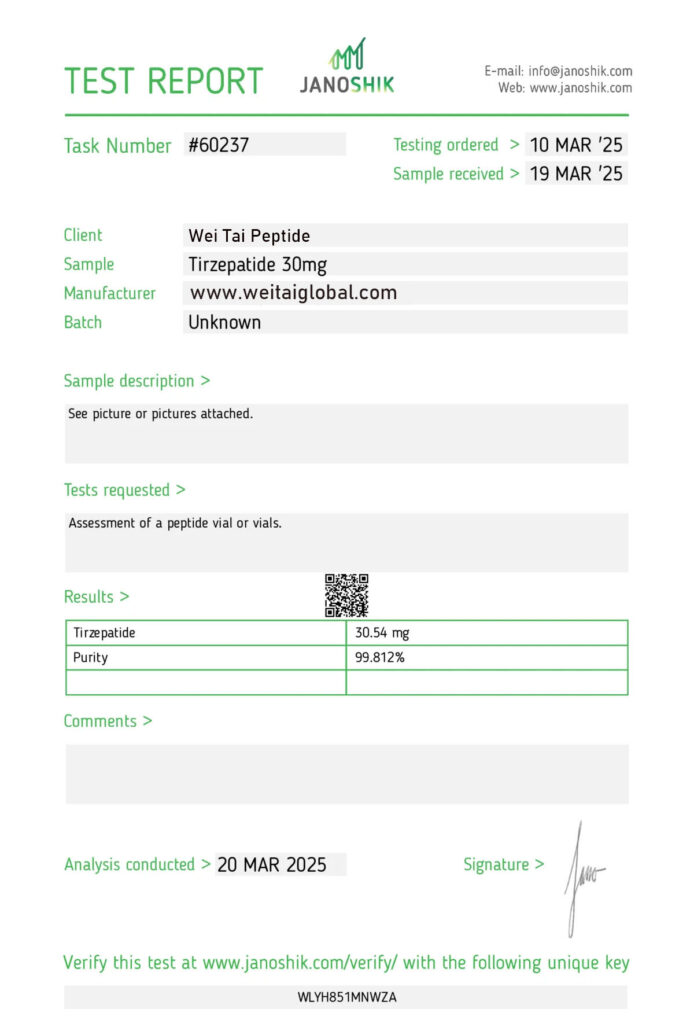
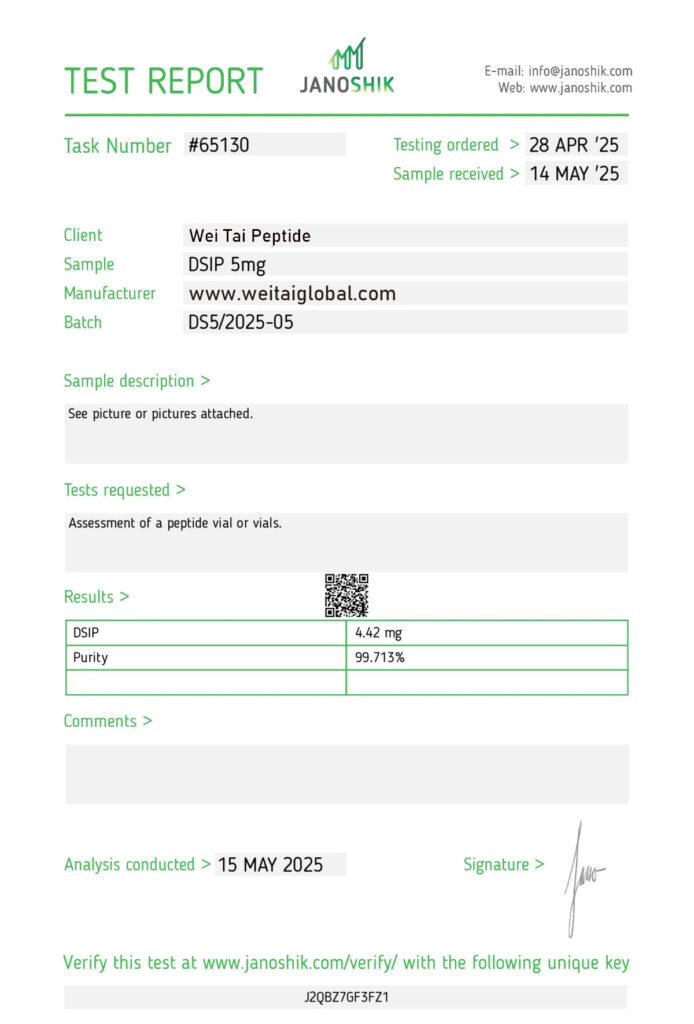
A Certificate of Analysis (COA) is an official laboratory document that verifies the quality, purity, and composition of a peptide product. It provides detailed test results for a specific batch, ensuring that the material meets defined standards and specifications. For researchers, a COA is essential for confirming that the peptide they are using is accurately represented and suitable for experimental use.
What Information Does a COA Include?
A typical COA contains key analytical data used to validate a peptide’s integrity and consistency. This often includes:
-
Purity percentage (commonly determined by HPLC analysis)
-
Molecular weight confirmation (via mass spectrometry)
-
Appearance and physical description
-
Batch or lot number for traceability
-
Date of analysis and testing laboratory details
These elements provide a transparent overview of the peptide’s characteristics, allowing researchers to verify its quality before use.
Why COAs Matter in Peptide Research
In scientific research, accuracy and reproducibility are critical. Even minor impurities or inconsistencies can affect experimental outcomes. A verified COA ensures that each peptide batch has been independently tested and meets strict quality standards.
By reviewing COAs, researchers can confidently select materials that align with their requirements, reducing uncertainty and improving the reliability of their results. Transparent access to lab reports also builds trust between suppliers and the research community, making COAs a fundamental part of responsible peptide sourcing.